Scenario
When the card reader says "offline" for days, not minutes
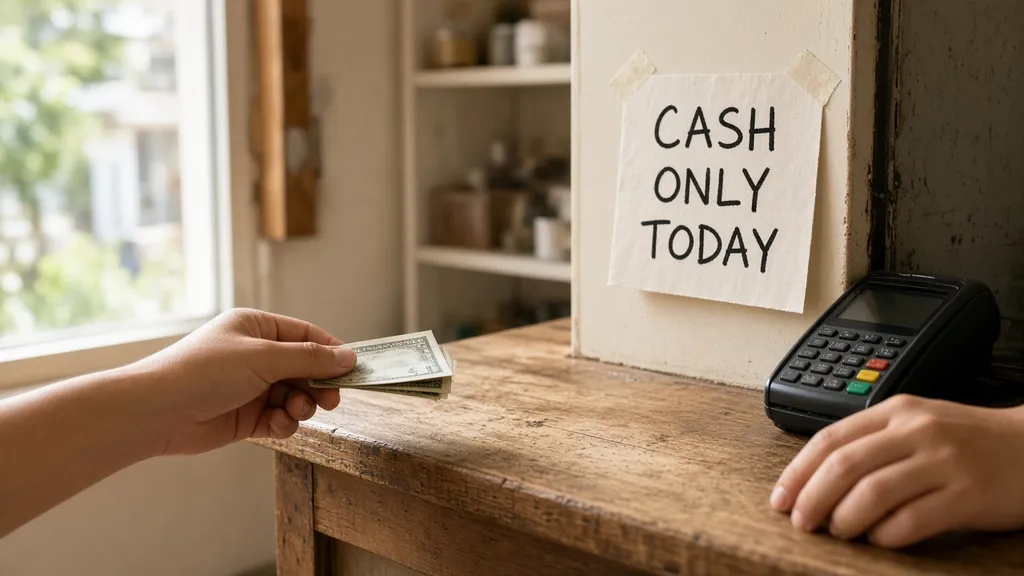
Most outages at the register last minutes. This scenario is the longer version: a multi-day failure where tap, chip, and phone wallets don't work at most stores. Some businesses close. The ones that stay open take cash, and often can't make change.
On this page
What stops working
- Tap-to-pay, chip cards, and phone wallets at the register
- Self-checkout lanes and many app-based ordering systems
- Online payments for delivery, rideshare, and subscriptions
- Some transit gates and parking systems that only accept cards
What usually keeps working
- Cash, if you have it before the outage starts
- Your stored food, water, and supplies at home
- Local stores willing to run a cash-only line or keep a paper tab
- Radio broadcasts and printed information
First 24 hours
- 1Stop depending on the card. Assume every purchase for the next few days needs cash.
- 2Count what you have and split it: most stays home, a small amount goes in your wallet.
- 3Keep small bills. Stores that stay open often can't break large notes.
- 4Skip nonessential purchases so your cash lasts.
- 5Check a battery radio or official local alerts for store and transit updates.
Days 2 to 7
- Eat from your home stock first, starting with what spoils fastest.
- Coordinate with neighbors. Swapping change and sharing information is often more useful than another trip out.
- Keep a written record of anything you pay for or owe. It matters when systems come back and charges post late.
- Refill prescriptions early if a pharmacy is taking cash, and talk to your clinician about a buffer before any outage.
Apartment notes
- Many buildings collect rent, laundry, or package fees digitally. Find out now what your building does when those systems are down.
- Keep cash somewhere that isn't obvious and isn't the first drawer by the door.
Buy / Borrow / Skip
Buy: a cash envelope or small lockbox, a waterproof document pouch, a 7-day stock of food you already eat.
Borrow: change from neighbors, a printer for copies of your cards and IDs.
Skip: "survival currency" products, gold coins sold as outage prep, and anything promising "guaranteed purchasing power."
What to buy
Cash & Documents
envelope or lockbox for small bills, waterproof pouch for ID and card copies.
Shop Cash & Documents
Water
containers so you're not buying bottled water with scarce cash.
Shop Water
Cooking
a manual can opener and simple no-cook staples.
Shop Cooking
Radio & Comms
a battery or hand-crank radio for store and transit updates.
Shop Radio & Comms
Related: Bank and ATM access · 72-hour checklist
Last reviewed: September 26, 2026
Sources
We base the how-to steps on this page on public guidance. We link to it so you can check it yourself.
- Ready.gov (FEMA): Financial Preparedness. Keep a small amount of cash at home in small bills, because ATMs and cards may not work during a disaster.
- Ready.gov (FEMA): Emergency Financial First Aid Kit (PDF). Which household documents and account details to keep copies of.
- Ready.gov (FEMA): Water. At least one gallon of water per person per day, for several days.
- Ready.gov (FEMA): Emergency Alerts. How official alerts reach you by radio, TV and phone.